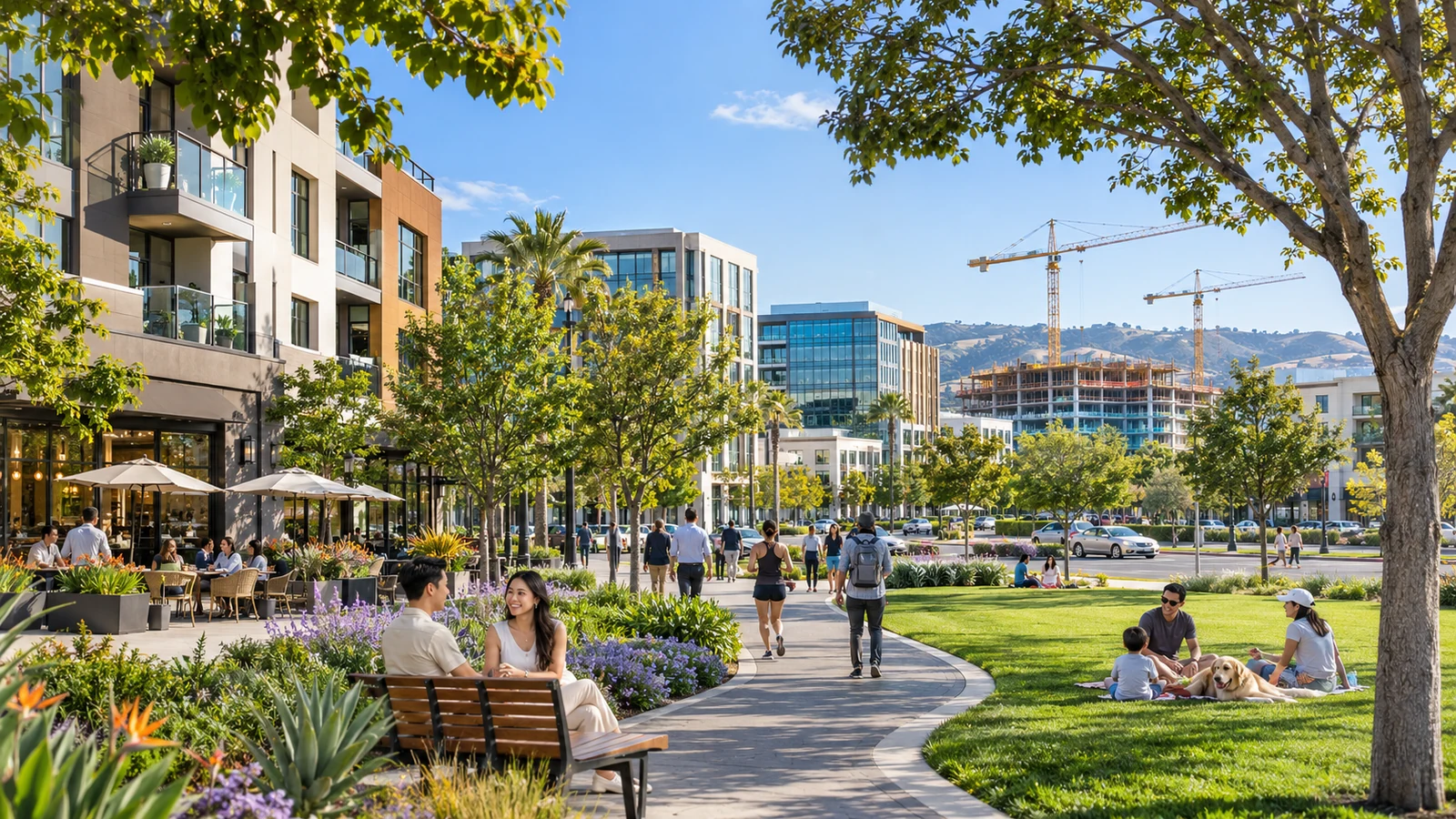
A construction fence appears beside a familiar road. A neighborhood group shares a rendering of a proposed building. Someone says a large project has already been approved. How do you know what is happening? In Irvine, the most useful answers usually begin with official planning records rather than a promotional image or social-media summary. Learning how to identify a project and track its status helps residents separate proposed changes from final decisions, understand the questions being reviewed, and avoid passing along outdated information.
Identify the project before interpreting the news
Start with the street address and the name of the applicant or development. Projects can have branding names that differ from titles on planning documents, and a familiar site may be included in a larger application. The City’s Development Projects Map is designed to help residents see notable proposals and major projects. Search the site or location, then note the project number and the latest dated entry. If the public map has only a summary, use those identifiers to look for meeting materials and application records.
Pending, approved, and built are separate stages
The City’s pending major development applications page covers active discretionary planning cases. Those cases can be approved, approved with conditions, or denied. Approval also does not mean that construction begins the next day. Design revisions, permits, financing, contractor schedules, and other approvals can intervene. Completed projects are another category entirely. When writing about a proposal, use precise verbs: “proposed,” “under review,” “approved,” or “under construction” only when the source actually supports that description.
Follow the record backward and forward
A current agenda attachment may summarize earlier decisions without showing all the changes. Read any linked staff report, notice, exhibits, and applicable environmental materials. Note the meeting date and any continued hearings. Later filings may revise the size, uses, or configuration of a project. If coverage refers to an older rendering, compare it with the latest documents before describing its features. Our guide to following Irvine city decisions explains how to track an item from recommendation to official outcome.
Know which city tools answer different questions
Planning and development resources help explain land use and discretionary approvals, while building-permit services address different stages of construction. The City’s Planning and Development page brings together links to policies, current projects, and related tools. Irvine Ready! provides information for planning and building application workflows, but it is not a substitute for reading the project’s public planning history. Use the source best suited to the question. A permit inquiry may confirm a narrower construction detail than an older master-plan document.
A practical project tracking table
For each proposal, record six fields: site address, applicant, official project number, current status, last update, and next known public date. Keep one additional column for your question, such as road access, park space, height, or the number of proposed residential units. This turns a large amount of material into a manageable local record. If no future date has been announced, say so; that is more trustworthy than guessing when construction will start.
Distinguish city projects from private development
A road resurfacing program, trail connection, or signal improvement may be a public capital improvement rather than a private development proposal. The City maintains a separate capital improvement projects map for active public work. Mixing these categories can confuse residents who are trying to understand funding, review, or project ownership. Some projects involve both private improvements and public infrastructure. Identify what each agency or applicant is responsible for instead of describing the entire construction area as one undertaking.
Evaluate what matters to the surrounding community
A proposal’s design is only part of its potential effect. Residents may be interested in housing choices, travel demand, pedestrian safety, nearby services, access to parks, construction disruption, or environmental review. Rather than assuming the outcome will be positive or negative, read the issues addressed in official reports. Compare them with the exact location and the characteristics of nearby streets. Our neighborhood villages guide explains why access and amenities differ across Irvine even when developments share similar branding.
Ask specific, answerable questions
A useful question is more precise than “Will this change everything?” Ask what is proposed, whether the requested zoning permits it, which improvements are conditions of approval, when the next hearing is scheduled, and where updated plans will appear. If the record does not answer an important point, the responsible department is a better contact than an unrelated social-media account. Save written replies or public notices with their dates. The same discipline improves summaries of what’s changing around Irvine in 2026.
Recheck status before making decisions
Development information is time-sensitive. A proposal can be revised after public comment, a hearing may be postponed, and construction milestones can shift. That matters for anyone considering a property purchase, lease, business location, or commute. Check the latest official record close to the time when you need the information. Treat an older article as background context, not a substitute for a current application or approved plan. If a story quotes a figure, look for the date attached to it.
What an environmental document can and cannot tell you
Some projects include environmental review addressing particular potential impacts and mitigation measures. The presence of a technical report does not mean every possible concern has been resolved or that the project will necessarily proceed. Read the summary and scope first, then look for the parts relevant to your question. Distinguish the agency’s findings from an applicant’s claims. Where an item has been revised, confirm that you are using the most recent version. You do not need to become an environmental specialist to ask whether a conclusion applies to the specific location or design currently under consideration.
When to contact the planning department
If the public documents are unclear, use the contact information on the city’s planning page and provide the project number or address. A specific question often receives a more useful response than a broad request for everything known about a development.
Understanding Irvine development updates does not require professional planning expertise. It requires a reliable sequence: identify the location, find the official project, read the latest status, track the decision process, and revisit the source as conditions change. When local conversations start from shared, dated facts, residents can ask better questions and discuss the future of their neighborhoods more productively.
End of article