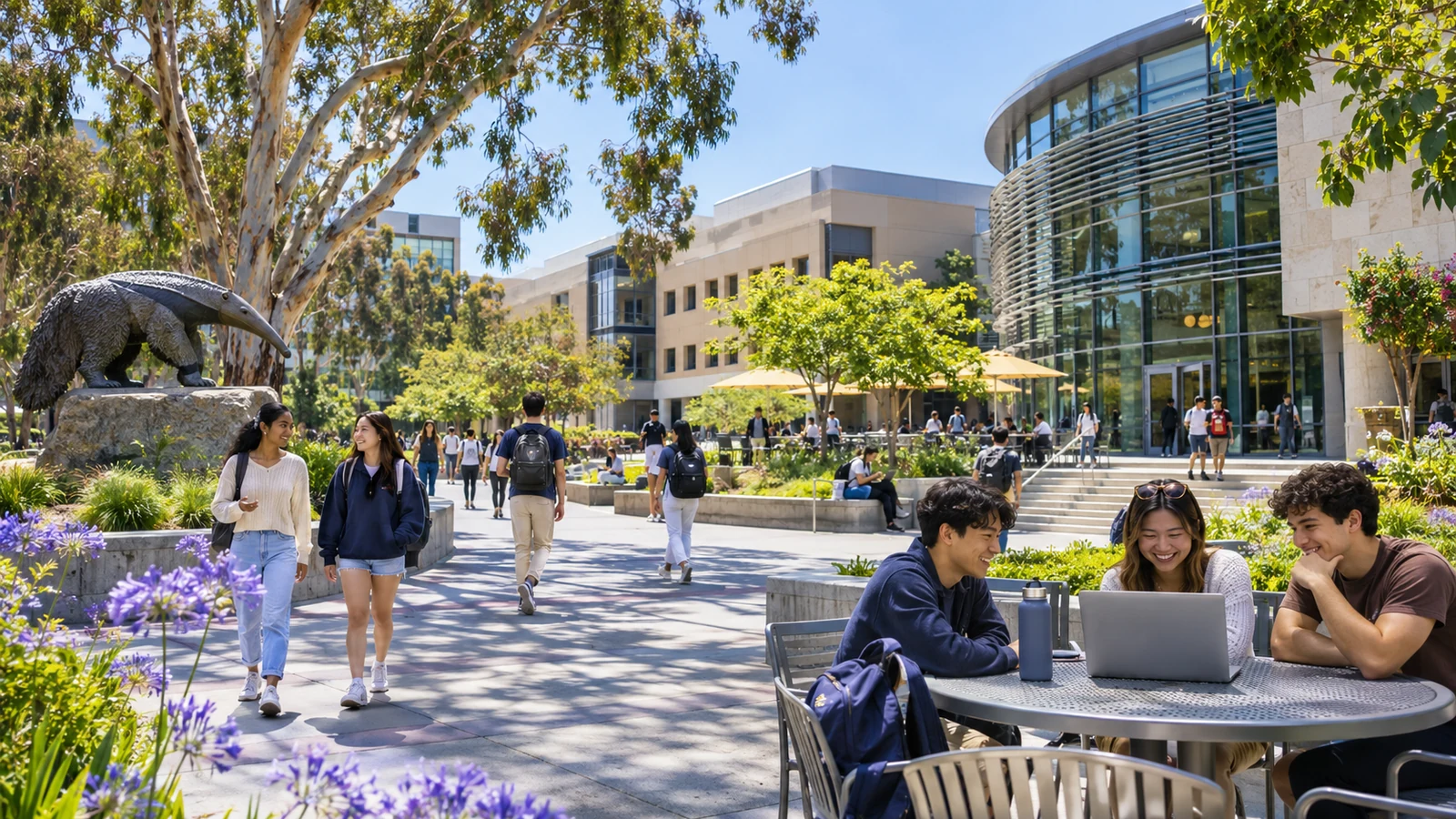
UC Irvine is more than a university that happens to sit inside Irvine. Its campus, public performances, research activity, libraries, surrounding businesses, and open spaces help shape the wider community. Visitors do not need to be students to appreciate that influence, but campus access is not identical for every facility or event. The easiest way to explore is to begin with public destinations, use official visitor information, and plan enough time to navigate the university’s distinctive layout.
Understand the campus as part of the city
The relationship between UC Irvine and the city is historically important. The university was central to early planning for a new community on former Irvine Ranch land. The UCI Special Collections account describes the late-1950s vision for a university-centered town and how it influenced later development. That history is visible in the relationship between campus areas, surrounding streets, residential neighborhoods, and nearby commercial destinations. For a longer perspective, our history of Irvine as a planned city connects the university era to the city’s agricultural past.
Find your way before arriving
UC Irvine’s campus is extensive, and a destination described by a department name may be far from the parking structure or bus stop you initially choose. The university’s visitor page links to maps, parking guidance, and points of interest. Save the building name and exact event venue, then use the current interactive map to locate the best entrance. Distances on a campus map can be deceptive if a route includes bridges, stairs, or a long walk around a restricted area. Allow more time than you would for a small neighborhood campus.
Parking and transit have their own rules
Visitor parking generally requires an appropriate permit, and parking rules may differ between lots, structures, and event areas. Check UCI visitor parking information for current purchasing options and restrictions. If you use transit, plan your walk from the stop to the actual building. Multiple bus services can serve areas near campus, but the right option depends on your starting point and day of travel. Our car-free Irvine guide explains how to check current bus schedules and first-mile connections.

Explore public culture and performances
Public events are among the best ways for a nonstudent to experience campus life. UCI Arts presents exhibitions and performances through different departments and venues, with events that may be free, ticketed, or subject to reservation. Use the current UCI Arts calendar to check admission terms, venue details, and the event’s actual date. An exhibition’s hours may not match the building’s general opening hours, and a special performance might have a different entrance from a regular class activity.
A low-pressure first visit
Pick one public event or destination and build a short walk around it. Arrive with a campus map, verify the parking area or bus stop, and keep a flexible schedule for coffee or lunch nearby. If the visit is mainly for scenery, check whether the outdoor space you plan to use is publicly accessible and whether an event affects normal access. Do not enter teaching labs, residence halls, or restricted facilities without authorization. Public culture is easier to enjoy when campus boundaries and posted rules are respected.
Education and research shape local business life
A major research university influences the region beyond its classrooms. Students, faculty, staff, visiting researchers, and local partners contribute to demand for housing, transit, food, professional services, and cultural activities. Some businesses near the university serve campus routines; others draw customers from across Irvine. It is worth seeing the university as a community hub rather than making broad claims that every local business depends on it. For a practical exploration of nearby destinations, see our Irvine food and shopping guide.
Think beyond the center of campus
University-related life extends to surrounding public spaces, gathering areas, and neighborhoods. A walk near campus can reveal the contrasts between academic buildings, landscaped paths, housing, and roads connecting the university to the rest of the city. If you want to understand those connections, compare the campus map with city maps and the story of Irvine’s neighborhood villages. Not every landscaped area is a city park, and not all campus facilities are open to the public, so verify access before planning recreational use.

Plan for an event’s real-world logistics
Large campus events can mean extra traffic, full parking areas, or modified pedestrian routes. Review any special instructions supplied with your ticket or registration confirmation. Check whether accessible parking, step-free routes, or seating arrangements are available through the organizer. If multiple events are taking place, allow a buffer for finding your venue. Do not rely on an outdated map screenshot when a current campus map is available. Good planning lets the program itself, rather than parking uncertainty, become the focus of the visit.
Keep your connection to campus current
Campus activity changes with academic terms, holidays, construction, and event schedules. A favorite exhibition series may move locations or have different admission rules in a new season. Bookmark the official university and department pages instead of depending on old event listings. If you’re exploring an educational opportunity, start with the responsible admissions or program office; for a public event, use the organizer’s own listing. Our guide to finding local events around Irvine offers a repeatable routine for checking details before attending.
Look for community-facing learning opportunities
Universities host more than formal degree programs. Depending on the department and season, public lectures, exhibitions, workshops, and other events may offer ways to learn about research or cultural subjects. Check the official event listing for whether visitors may attend, whether registration is required, and whether the venue has special access rules. Avoid assuming that an interesting seminar shown on a departmental calendar is automatically open to everyone. When it is public, arriving prepared with the correct building location and event details makes the experience more welcoming and less confusing.
Keep campus etiquette in mind
A working university includes classrooms, offices, residence areas, and active research spaces. Public visitors should use designated routes, respect posted photography rules, and avoid interrupting classes or private activities. The best exploration is curious but considerate.
UC Irvine is both an academic institution and a long-standing part of the city around it. Exploring the public side of campus can deepen your understanding of Irvine’s origins, cultural life, and present-day routines. Start with a clear destination, follow current visitor guidance, and approach the campus as a place where different communities meet, with shared spaces and boundaries worth understanding.
End of article